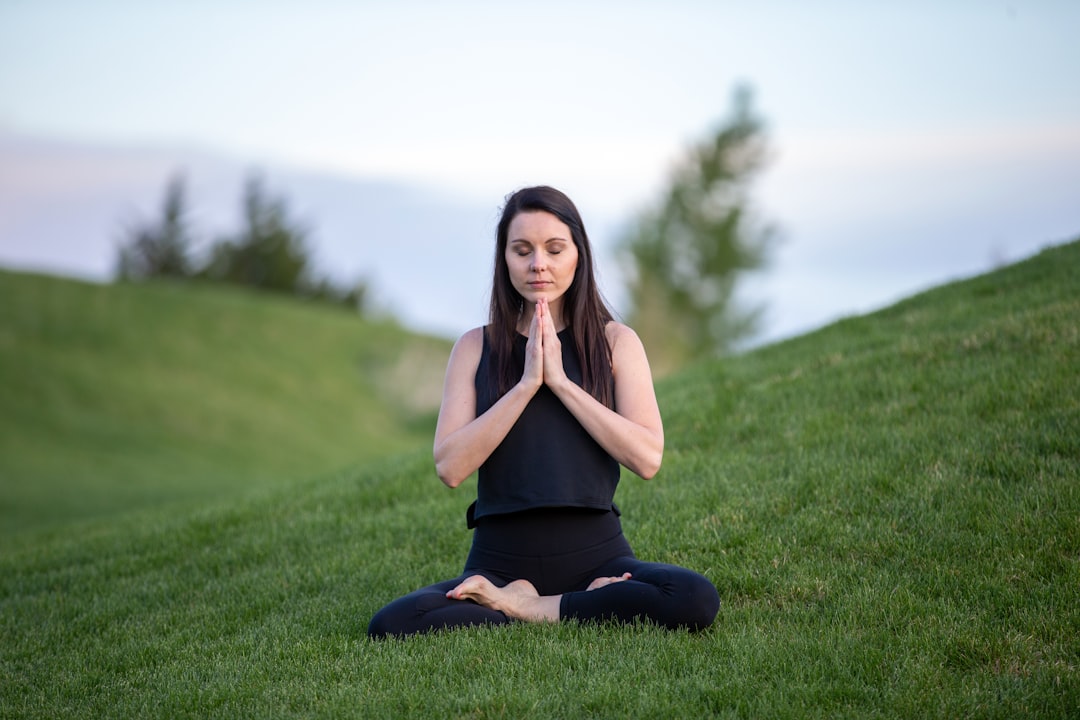
Most stress management advice sounds good and does very little. Light a candle. Take a bath. Go for a walk. These things are not useless, but they are also not strategies. They are distractions at best. What actually moves the needle on stress are techniques grounded in how your nervous system and your brain genuinely work. As a Canadian mental health clinic, we hear from clients every week who have tried "relaxing" and still feel completely overwhelmed. The difference is almost always method. Real stress management techniques have evidence behind them, a clear mechanism, and a way to practise them daily. This article covers three of the strongest ones we use in clinical settings at Threshold Clinic.
Why Most Stress Advice Fails
Stress is a physiological event before it is a psychological one. When your brain registers a threat, whether it is a work deadline or an argument with a partner, it activates the sympathetic nervous system. Your heart rate increases. Cortisol and adrenaline flood your system. Digestion slows. Muscles tighten. You are biologically primed to fight or flee.
The problem is that most modern stressors cannot be fought or fled. You cannot sprint away from a difficult email. So the stress response stays activated, and your body pays the price. Chronic activation of this system is linked to sleep disruption, digestive problems, tension headaches and worsened mood.
Generic advice like "try to relax" does not give your nervous system anything useful to do. It is like telling someone with a broken leg to walk it off. Effective stress management techniques work because they directly interrupt the physiological stress cycle. They give your nervous system a concrete input that shifts it toward the parasympathetic state, which is rest and recovery mode.
That is what the three techniques below do. Each one has a different entry point: breath, body and thought. Together they cover the most common ways chronic stress maintains itself.
Diaphragmatic Breathing: The Fastest Reset Your Nervous System Has
Diaphragmatic breathing, sometimes called belly breathing or deep breathing, is not just slow breathing. It is breathing that uses the diaphragm muscle fully rather than the shallow chest breathing most of us default to under stress.
Here is why it works. Your vagus nerve runs from your brainstem down through your chest and abdomen. Slow, deep breathing that expands the belly stimulates the vagus nerve directly. That stimulation sends a signal to your brain that safety has been restored. Heart rate slows. Cortisol starts to come down. The parasympathetic nervous system takes over. This can happen within two to three minutes of practising correctly.
How to Practise Diaphragmatic Breathing
- Sit comfortably or lie down. Place one hand on your chest and one on your belly.
- Breathe in slowly through your nose for a count of four. Your belly should rise. Your chest should stay relatively still.
- Exhale slowly through your mouth for a count of six or eight. Longer exhales amplify the parasympathetic response.
- Repeat for five to ten minutes.
The ratio matters. Making your exhale longer than your inhale is the clinical key. A 4-6 or 4-8 breath ratio is consistently used in evidence-based clinical programmes, including those developed by the Centre for Addiction and Mental Health (CAMH). Some clients prefer box breathing, which uses four counts on the inhale, a four-count hold, four on the exhale and a four-count hold. Both work. What matters is consistency.
Our Registered Counsellors at Threshold Clinic often introduce diaphragmatic breathing in the first or second session with clients who present with anxiety or chronic stress. The feedback is consistent: clients are surprised by how immediate the physical shift feels. But like any skill, it requires regular practise outside of crisis moments. Practise it when you are calm so it becomes automatic when you are not.
Progressive Muscle Relaxation: Releasing What Your Body Is Holding
Chronic stress lives in the body. Tight shoulders. A clenched jaw. A contracted belly. Many people carry this tension so constantly that they stop noticing it. Progressive muscle relaxation (PMR) was developed to address exactly this.
PMR involves deliberately tensing and then releasing specific muscle groups throughout the body, working systematically from feet to head or head to feet. The act of tensing a muscle before releasing it produces a deeper relaxation in that muscle than simply trying to relax it cold. Your nervous system learns the contrast between tension and release, and over time you become much better at noticing and releasing tension on demand.
A Basic PMR Sequence
- Find a quiet place and lie down or sit in a supportive chair.
- Begin at your feet. Tense the muscles in both feet by curling your toes downward. Hold for five to seven seconds. Release completely and notice the difference for ten to fifteen seconds.
- Move upward through your calves, thighs, abdomen, hands, forearms, shoulders, neck and face, tensing and releasing each group.
- The full sequence takes fifteen to twenty minutes. Shorter versions targeting just the shoulders, jaw and hands can be done in five minutes during a workday.
PMR is used widely in cognitive behavioural therapy (CBT) programmes across Canada and is a standard component of evidence-based treatment for generalised anxiety disorder. The Canadian Mental Health Association (CMHA) includes guided relaxation techniques like PMR in its stress management resources for a reason: the body and mind are not separate systems. Releasing physical tension directly reduces perceived psychological stress.
If you find PMR difficult to do alone at first, our Licensed Clinical Doctors can walk you through a guided version during a session. Many clients find that having a clinician guide them helps them actually reach the relaxation response rather than lying there thinking about their to-do list.
Cognitive Reframing: Changing the Thought, Not Just the Feeling
Breath and body work manage the physiological side of stress. Cognitive reframing works on the cognitive side. It is one of the core techniques within cognitive behavioural therapy, which is among the most rigorously studied therapeutic approaches in the world.
The basic premise is this: stress is not caused purely by events. It is caused by how you interpret events. Two people can receive the same critical feedback from a manager. One person thinks "I am failing and I will lose this job." The other thinks "This is uncomfortable but it tells me where to focus my energy." Same event, very different stress response. Cognitive reframing is the skill of identifying the interpretation and choosing a more accurate one.
Common Thought Patterns That Amplify Stress
- Catastrophising: Assuming the worst possible outcome is the most likely one.
- All-or-nothing thinking: Seeing situations as total success or total failure with nothing in between.
- Mind reading: Assuming you know what others think, usually negatively.
- Overgeneralisation: Taking one negative event as evidence of an endless pattern.
How to Apply Cognitive Reframing
When you notice your stress rising, pause and write down the thought driving it. Ask yourself three questions. What is the evidence that this thought is completely true? What would I say to a close friend who was thinking this? What is a more balanced interpretation that is still honest?
You are not looking for toxic positivity. "Everything is fine" is not reframing. You are looking for accuracy. Stress often inflates threats. Reframing brings them back to their actual size.
This takes practise. In our clinical experience working with clients across Canada, cognitive reframing is the technique people most consistently underestimate at first and most consistently credit as transformative after several weeks of deliberate use. The skill compounds. The more you catch and challenge distorted thoughts, the faster you get at it.
Building a Daily Stress Management Practice That Sticks
Knowing about these stress management techniques is not the same as using them. The gap between knowing and doing is where most self-help falls apart. Here is how to close it.
Start with one technique, not all three. Pick the one that resonates most and commit to it for two weeks before adding another. Diaphragmatic breathing is often the easiest entry point because it requires no equipment, no space and almost no time.
Anchor it to an existing habit. Practise your breathing technique right after you make morning coffee, or right before you open your work email. Habit anchoring dramatically increases follow-through because it removes the decision of when to practise.
Practise when calm, not just when stressed. All three of these techniques are skills. Skills need practice outside of performance conditions. If you only try diaphragmatic breathing when you are in a panic, you will find it difficult. If you practise daily for two weeks during neutral moments, it will be available to you when you genuinely need it.
Track it simply. A small notebook or a notes app where you log whether you practised today is enough. You do not need a complicated wellness tracker. You just need to notice whether you showed up.
Be honest about obstacles. If a technique is not working for you, there is usually a reason. PMR may bring up physical discomfort or anxiety in some people. Cognitive reframing may feel impossible if underlying depression is affecting your thinking. These are clinical signals, not personal failures. This is worth discussing with a Registered Counsellor who can adapt the approach.
When Self-Help Is Not Enough
These techniques are genuinely effective. They are also tools, not treatments. If your stress has crossed into territory that affects your sleep consistently, your relationships, your ability to work or your sense of safety in your own life, that is not a sign to try harder with breathing exercises. That is a sign to reach out to a professional.
Chronic stress can be a gateway to anxiety disorders, burnout and depression if left unaddressed. Getting support early is not a weakness. It is the most practical decision you can make.
At Threshold Clinic, our team of Licensed Clinical Doctors and Registered Counsellors works with individuals across Canada experiencing everything from work-related stress to complex trauma. We use evidence-based approaches including CBT, mindfulness-based cognitive therapy and somatic techniques, all tailored to the individual in front of us. Our sessions are available both in-person and online, because geography should not be a barrier to mental health care.
If you are not sure where to start, you can also reach out to the Canadian Mental Health Association's national helpline or your provincial health line for immediate guidance. CMHA and CAMH both offer publicly accessible resources designed for Canadians navigating stress and anxiety.
Stress is one of the most universal human experiences. Managing it well is one of the most learnable skills. You do not have to white-knuckle your way through it, and you do not have to do it alone.